
Clarksburg City Directory Collection Shelf
Clarksburg is an unincorporated Census-designated place in Montgomery County, so no municipal clerk kept a directory series for it. The trail runs elsewhere. The strongest direct lead is an 1879 county history and directory with a Clarksburg village entry. Maps and newspapers fill other gaps. Read each source on its own date and geography. A village heading, a road label, or a nearby station often matters more than any present-day address when the material is old.
| Collection | Years | Where Held | Access |
|---|---|---|---|
| Boyd's History of Montgomery County and directory | 1879 | Library of Congress digital collection | Free searchable PDF |
| Martenet & Bond county map | 1865 | Library of Congress map collection | Online map viewer |
| Hopkins county atlas | 1879 | Library of Congress map collection | Online map viewer |
| Montgomery County Sentinel | 1855-1974 | Chronicling America | Digitized newspaper images |
| Regional reverse-directory leads | 1912 and later selected runs | Montgomery History finding aid and local shelves | Verify the volume onsite |
Treat the table as a source map, not proof of steady coverage. Gaps are real here. The county offers no dedicated online Clarksburg Polk or criss-cross directory. No final printed Clarksburg directory year is settled. Ask for the physical volume and its geographic index first.
Clarksburg City Directory Begins With Boyd
The free 1879 Boyd directory is the first Clarksburg-specific directory material. Boyd organizes by village, trade, public role, and institution. The entry names a postmaster, merchants, craftspeople, a hotel keeper, and a justice. Churches and schools appear too. An Odd Fellows Hall, a Literary Association, and King's Distillery fill out the list. Together they sketch the village's social and commercial life. The sketch is a dated snapshot, however, not a roster of Clarksburg residents today. Boyd places Clarksburg on the Washington-Frederick turnpike. He credits the first house to John G. Clark. Henry Griffith land and the Catawba grape also appear. Anyone tracing a surname should record the PDF page, the category heading, and the names nearby, since a historical name can sit under an occupation or institution instead of a street-order list.
Clarksburg Historical Maps Before Streets
Maps supply the placement Boyd lacks. The 1865 Martenet & Bond map identifies householders, buildings, roads, and a Clarksburg inset. The 1879 Hopkins atlas adds patrons and landowners with parcel-and-road context. Each has its own geography. Match an old road label to the turnpike, Frederick Road, Boyd's Station, or Rocky Hill before hunting a modern street number. Period labels come first. The old village layout does not map one for one onto today's numbered addresses. A landowner label can open a deed, assessment, census, or Sentinel search. It is not a substitute. For a current parcel chain, the Clarksburg street directory route covers address-keyed county sources once the historic place is pinned down. Historic work comes first. Address-keyed sources answer different questions. Note: Preserve the map title, publication date, sheet or image reference, road label, and the exact position of the name before comparing later records.
Clarksburg Regional Directory Leads
Montgomery History's finding aid points to several regional reverse directories. These can matter when an address sat in the wider Washington suburban area. The leads it lists are Nelson's Washington Suburban Directory for 1912, 1916-18, and 1923. There are also Polk Washington Suburban volumes for 1927-28 and 1930-31, plus Polk Silver Spring volumes from 1954 and later. Treat these as shelf questions to pursue, not confirmed Clarksburg runs.
A standard residents directory works from a person's name toward an address or role. A reverse directory, sometimes called a criss-cross directory, works the other way. It starts from an address and leads toward an occupant clue. That flip matters for house history. Yet the geographic index and the physical volume both have to be checked onsite. Publication years for a region cannot, on their own, show that a Clarksburg road, village, or household made it onto the page.
Reading a Clarksburg City Directory Entry
Boyd's Clarksburg entry looks nothing like a later urban listing. Each name connects to a role. Occupations, businesses, institutions, and village categories carry the entry. No spouse appears in parentheses. There is no exact street number and no owner-or-renter mark, so read the 1879 village on its own terms rather than projecting later directory conventions backward.
| Name | Surname and given name or initial as printed under a category. |
|---|---|
| Role or occupation | A trade, public role, merchant, hotel, school, church, or society connection. |
| Village placement | Clarksburg and its road, turnpike, station, or category context rather than a modern street address. |
| Date | 1879, a single historical snapshot that needs a page citation. |
| Linked evidence | Map, atlas, deed or plat record, census schedule, Sentinel notice, or obituary. |
- Criss-cross directory
- A directory arranged from street or address to an occupant clue. A Clarksburg-specific run has not been verified online.
- Householder index
- An index that identifies a household head or person associated with a residence. It should not be assumed in Boyd's village entry.
- Abbreviation key
- The publisher's explanation of shortened terms. Photograph or record it before interpreting marks in a volume that actually contains one.
Clarksburg City Directory Research at Montgomery History
Montgomery History's collections widen the trail. Holdings include town and community vertical files, historic-house material, school, business, organization, and religion files, local books, deeds, wills, newspapers, yearbooks, ledgers, scrapbooks, and photographs. Family files can hold trees, letters, Bible material, photographs, and prior research. Biographical and obituary files add dates or relatives. A sparse Clarksburg directory entry is only a start. The Montgomery History collections view shows the special collections that can turn a Clarksburg directory clue into a documented family or place trail.
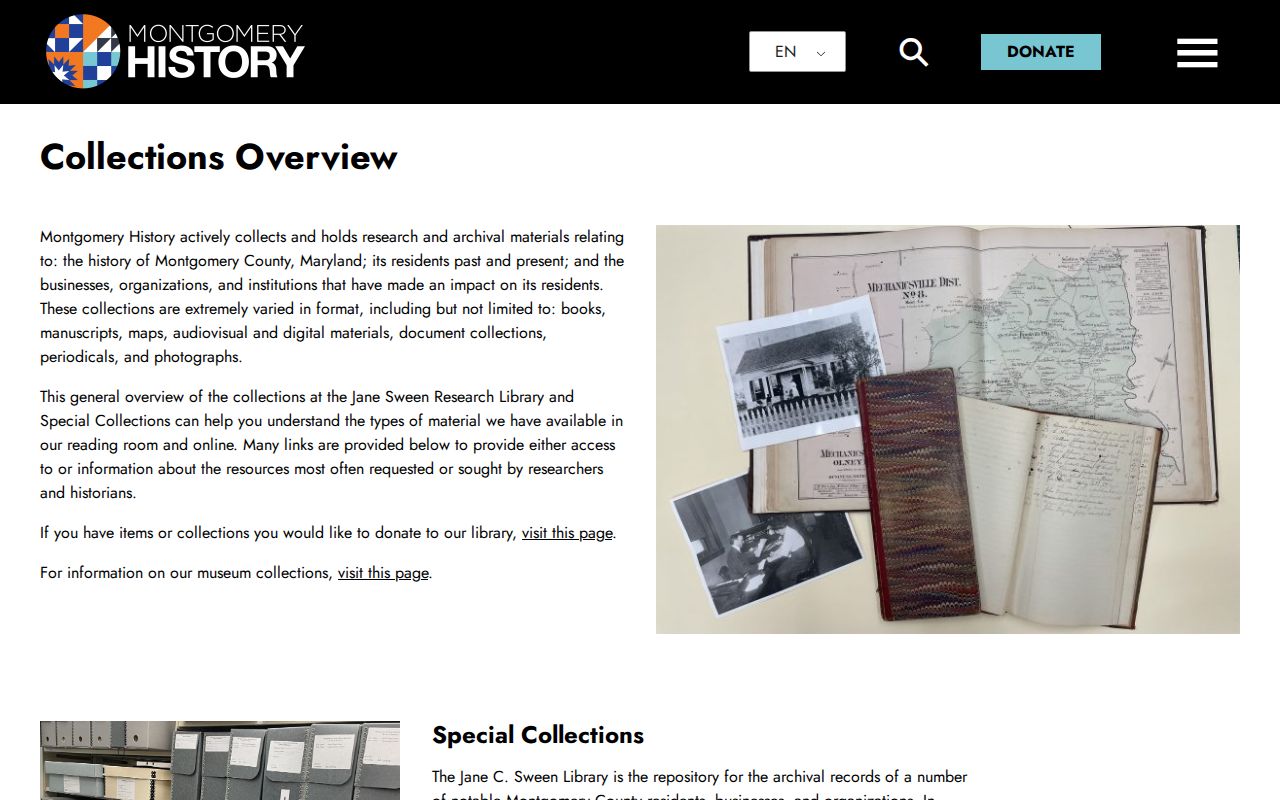
The catalog is a doorway, not the whole archive. Much of what matters sits in vertical files. Staff at Montgomery History handle both onsite requests and remote research questions, and those uncatalogued files often cover a road, church, or historic house tied to a Clarksburg residents directory lead.
Rockville is the county seat and the real research destination. Rockville Memorial Library supplies microfilm readers, public computers, copying, and reference access for county records work. Ask the desk for reverse or criss-cross directory volumes, newspaper microfilm, obituary material, and Clarksburg references rather than a broad resident list. The Rockville Memorial Library branch page shows the setting and equipment a visitor will use with local microfilm and printed sources.
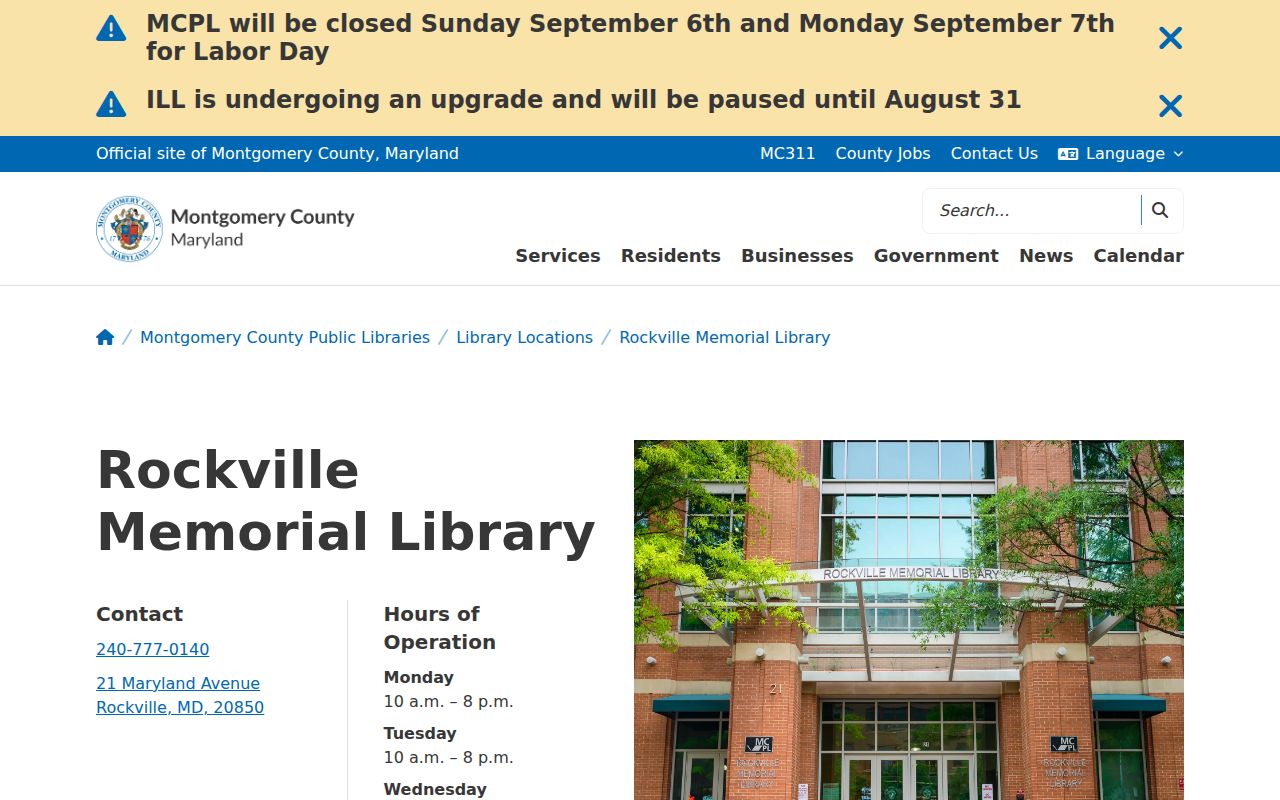
Digital catalogs have gaps. When an online result never appears, library readers and special-collections staff at Rockville remain the in-person fallback for checking a regional directory's geographic coverage.
Clarksburg Sentinel Name Clues
The Montgomery County Sentinel published from 1855 to 1974. A directory name there can open onto several kinds of clues. It may lead to obituaries, legal notices, and church and school items. Club news, road changes, and property sales can surface as well. Search a surname paired with Clarksburg first. Then retry the search with a church, school, road, or business. Boyd's Station works too. So does the old spelling Clarksburgh.
OCR misreads proper names all the time. Scan the page images themselves. A notice may name a rural route, a village, or a nearby community. It may skip the modern postal label entirely. So a missing OCR hit proves nothing about that issue. Newspaper evidence still needs comparison with the original directory entry and the map. It can settle a move, a death, or an institution. It can also pin down an event that a bare listing only hints at.
Note: Record the newspaper title, issue date, page, printed spelling, and image reference for every Clarksburg directory lead.
Clarksburg Directory Catalog Searches
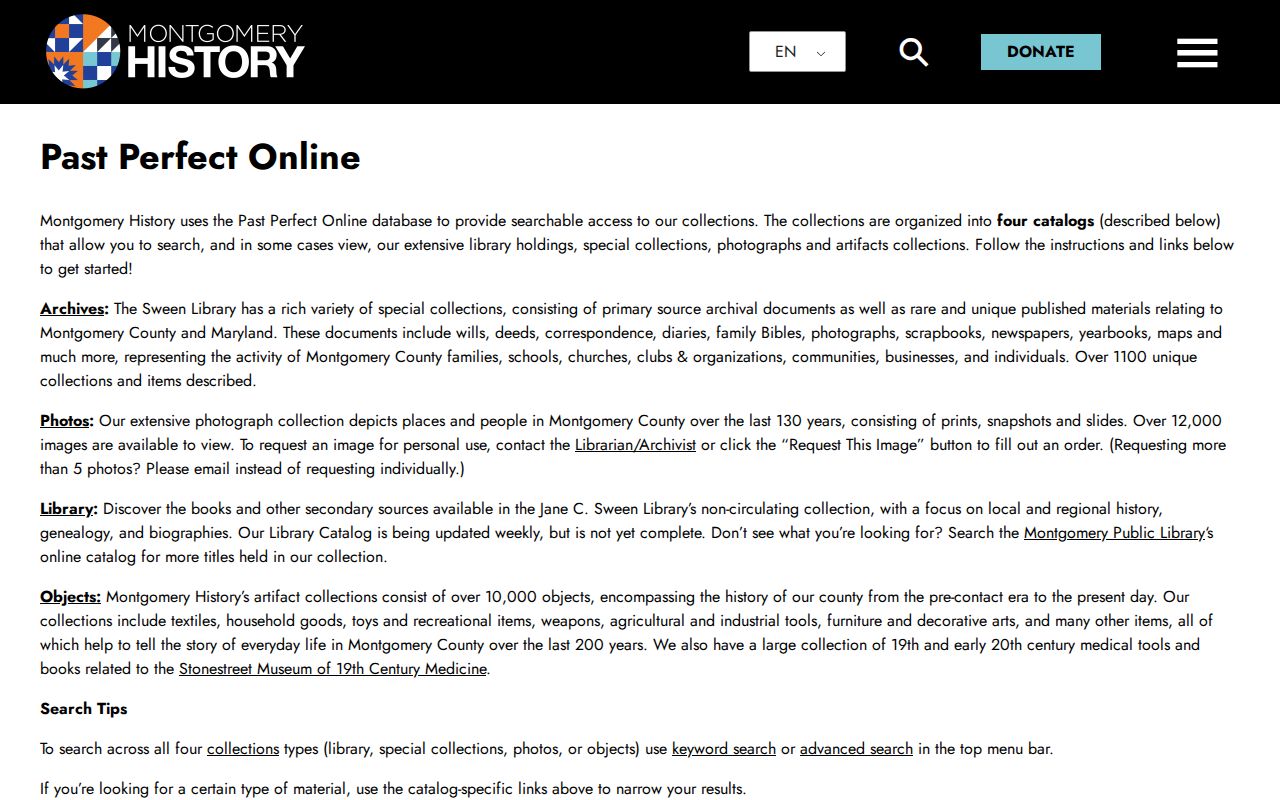
PastPerfect splits its holdings into separate Archive, Photos, Library, and Objects catalog areas. Search each one separately. One or two distinctive terms beat long phrases. The catalog itself warns that it is incomplete. An empty result still does not prove Montgomery History lacks a Clarksburg folder, image, book, or artifact, so ask the staff about uncatalogued material too.
The PastPerfect catalog landing page shows the four separate search paths for following a Clarksburg name or place clue.
Use the vocabulary each era actually wrote down. Searching Clarksburg, Clarksburgh, Frederick Road, the Washington-Frederick turnpike, Boyd's Station, Rocky Hill, Stringtown Road, and Ten Mile Creek can pull up different descriptions across the catalogs.
Tracing Clarksburg City Directories Over Time
Every clue should stay tied to its year. Start with a surname and an approximate year. Then follow the person through maps, Boyd volumes, newspaper notices, census schedules, and any verified reverse directory. Keep the historical place label attached. Pairing a directory year with the nearest released federal census can expose a household composition. An occupational listing may hide that same composition. The 1950 Census is the latest full population count open under the National Archives 72-year rule. That pairing is where a Clarksburg trail usually comes together.
- Find the earliest dated Clarksburg name, road, institution, or village reference and record the full citation.
- Compare the name with the 1865 map or 1879 atlas to test the road and landowner context.
- Search the Sentinel by name and place, then inspect every useful newspaper image.
- Check a verified reverse directory only after confirming that its geographic coverage includes the road or village.
- Pair the dated clue with the relevant released census, obituary file, deed or plat record, and Montgomery History material.
A disappearance from one source has many causes. It might reflect a move, a death, an altered spelling, a changed road label, or a plain gap in the record. Never pick one explanation without another source. The distinction matters, because a name in a historic collection is not yet a claim about a particular household.
Clarksburg City Directory Time Markers
Clarksburg's record vocabulary shifts with the community's history. Planning sources place William Clarke's trading post around 1735. John G. Clarke later surveyed and divided the plots. By 1804 the community counted at least 30 structures, and the B&O Metropolitan Branch arrived in 1873, pulling activity toward the rail line. The historic district designation came in 1979, and these markers supply context, never parcel-specific proof.
- 1735-1804: Early village and plot history may appear under Clarke or Clarksburgh forms.
- 1865: Martenet & Bond map supplies household, building, and road context.
- 1873-1879: Rail-era change and Boyd's village entry frame the available directory evidence.
- 1979: Historic-district designation adds a planning and architectural context that should be separately verified.
The contrast is worth keeping in mind. An 1879 entry captures a small named core of shops and institutions, while county and state custodians hold the modern records. Keep each record's date and geography visible.